 CitizenReady
Topic: Places to Visit
Places to Visit
Towers and castles, Roman baths and fossil coasts. Match the landmarks, sort London from not-London, and flip the visitor traps the exam sets.
Before we start — have a guess
Two warm-up questions for the visitor.
The Yeomen Warders — the Beefeaters — guard which landmark?
Primed ✓
The tallest building in the United Kingdom is…
Primed ✓ — now the grand tour.
The grand tour, in one strip
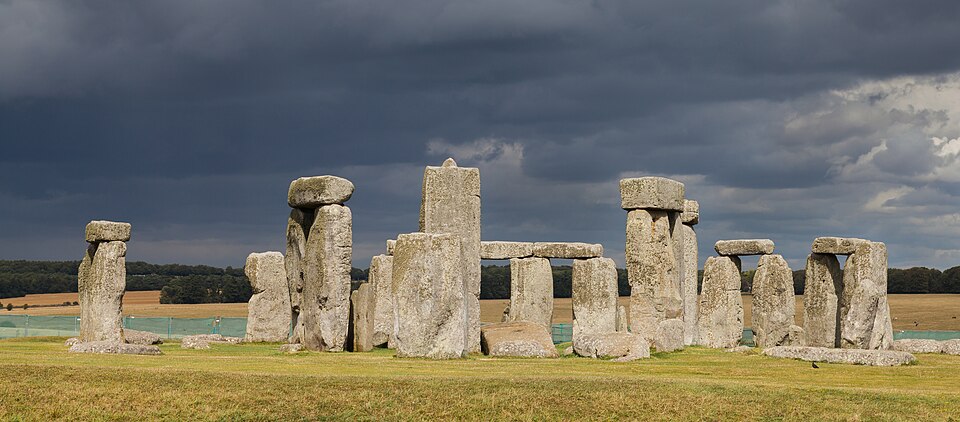
Stonehenge, older than the pyramids’ later fame — one stop on a very long list. Photo: Diego Delso, CC BY-SA 4.0.
From a fortress on the Thames to a castle on a volcano: Britain packs its landmarks densely, and the exam expects you to know which is where.
Match the landmarks
Tap a place, then tap its claim to fame.
Matched ✓ — Beefeaters at the Tower, a volcano under Edinburgh, Victory at Portsmouth.
London or not London?
Tap a sight to select it, then tap its bucket.
🏙️ London
🗺️ Not London
Sorted ✓ — the Crescent is Bath, Eden is Cornwall, the Pavilion is Brighton.
Flip the details
Answer in your head first, then tap to check.
What makes the Jurassic Coast special?
95 miles of Dorset and Devon cliffs stuffed with fossils — a natural history book written in rock.
Which ship waits at Greenwich?
The Cutty Sark — the great tea clipper, preserved by the Thames. (Victory, remember, is Portsmouth.)
How do you reach the continent by train?
By Eurostar from St Pancras International in London, through the Channel Tunnel.
What is Avebury?
A village inside one of the world’s largest prehistoric stone circles — older and wider than Stonehenge, and free to wander.
All flipped ✓
True or false — no thinking time allowed
Quickfire complete ✓ — Victory at Portsmouth, the Shard by London Bridge.
Six real questions on this topic
Score 5 or 6 and this topic is marked mastered on your path. Anything less: revisit the block you missed and retake.
✓ green = correct · ✗ red = wrong · 🚩 red ring = marked for review · gold outline = current question
Your result
Say it in your own words
Plan a visitor’s day: name three landmarks, where they are, and one thing that makes each famous. Say it out loud or write it down — then compare.
Reveal a model answer
Start at the Tower of London, guarded by the Yeomen Warders and home to the Crown Jewels; cross to St Paul’s Cathedral, rebuilt by Sir Christopher Wren after the Great Fire; then leave the capital for Edinburgh Castle, standing on its volcanic Castle Rock — or Bath, for the Roman Baths and the sweeping Royal Crescent.
Where next?
Drill all of Chapter 4 in the Chapter 4 practice sets, or pick your next topic on the Topics path.