 CitizenReady
The map — four nations, four colours
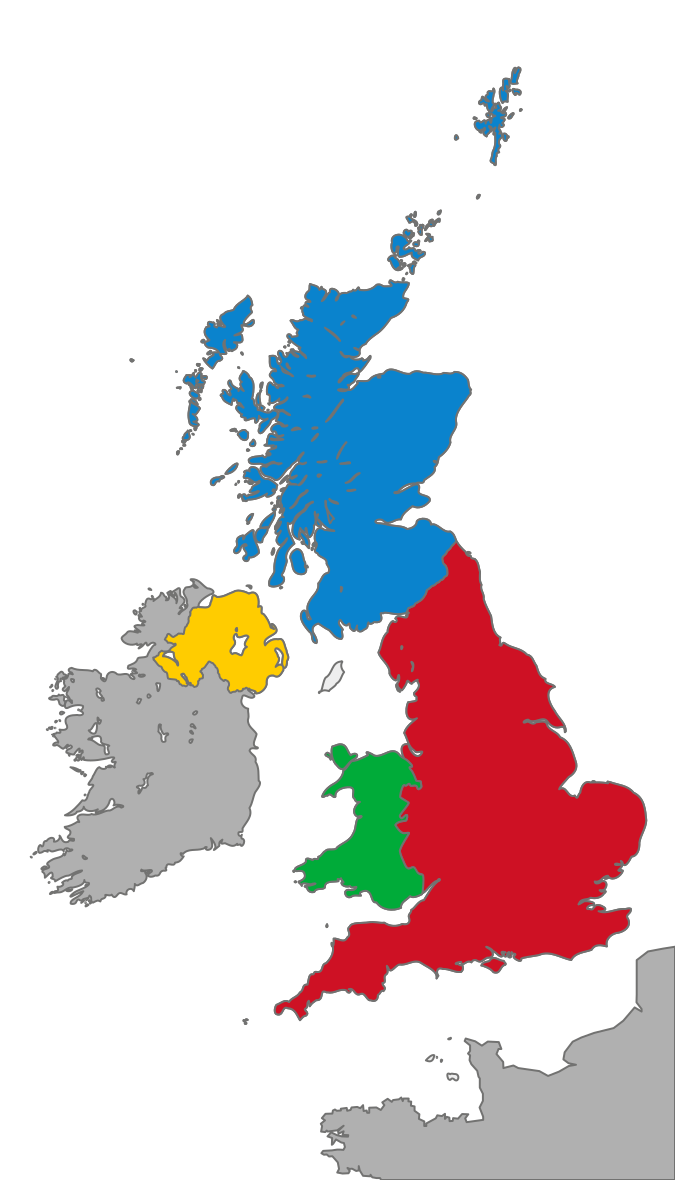
🌹 England
🏴 Scotland
🏴 Wales
☘️ Northern Ireland
England is by far the biggest of the four — most of the UK's people live there — which is why it has no parliament of its own: the UK Parliament at Westminster does that job. The other three nations each have their own elected body making laws on local matters such as health and education.
How the union was built, link by link
Wales is brought in first
Edward I of England conquers Wales, and the Statute of Rhuddlan brings it under English rule; his son is later given the title Prince of Wales — a title the heir to the throne still holds. Wales is the oldest join in the union.
🧠 First in, and the heir is still “Prince of Wales” — the title is the receipt for 1284.
Wales and England become one in law
Under Henry VIII, Acts of Union unite Wales with England in law: one legal system, and Welsh members in the Parliament at Westminster. The story you met in the Tudor storyline is doing quiet work here too.
🧠 The Tudors again: Henry VIII finishes in law what Edward I began by force.
Two crowns, one king
Elizabeth I dies childless and James VI of Scotland becomes James I of England as well. For the first time one monarch wears both crowns — but Scotland and England remain separate kingdoms with separate parliaments for another century.
🧠 1603 joins the crowns; 1707 joins the countries. Keep the pair apart.
Scotland joins by agreement
The Acts of Union merge Scotland and England into one kingdom: Great Britain, with a single parliament at Westminster. Crucially, this was a negotiated union — Scotland kept its own legal system, its own national church and its own education system, which is why they differ to this day.
🧠 A merger, not a conquest: Scotland’s separate law is the proof.
Ireland joins
A further Act of Union brings Ireland in, and the country becomes the United Kingdom of Great Britain and Ireland. Ireland’s parliament in Dublin closes and Irish MPs sit at Westminster.
🧠 The name grows with each join — “and Ireland” arrives in 1801.
Ireland leaves — the North stays
After years of conflict, most of Ireland leaves the union to become the Irish Free State (later the Republic of Ireland, fully independent). Six counties in the north-east stay in the UK — and the country takes the name it still carries: the United Kingdom of Great Britain and Northern Ireland.
🧠 Today’s full name is the receipt for this split: Great Britain + Northern Ireland.
Power flows back
Votes in Scotland and Wales back devolution, and in 1999 the Scottish Parliament and the Welsh Assembly (today the Senedd) open; Northern Ireland’s Assembly follows under the Good Friday Agreement. Health, education and other local matters are now decided in Edinburgh, Cardiff and Belfast — while defence, foreign affairs and immigration stay with Westminster.
🧠 The union loosens by design: three nations govern themselves locally, England is governed by Westminster.